
According to our experts, the implementation by the Slovak government of a large-scale infrastructure project in the field of nuclear energy, which involves the construction of a new Bohunice nuclear power plant near Jaslovské Bohunice based on the technology of the American company Westinghouse, contains corruption, political and financial and economic risks.
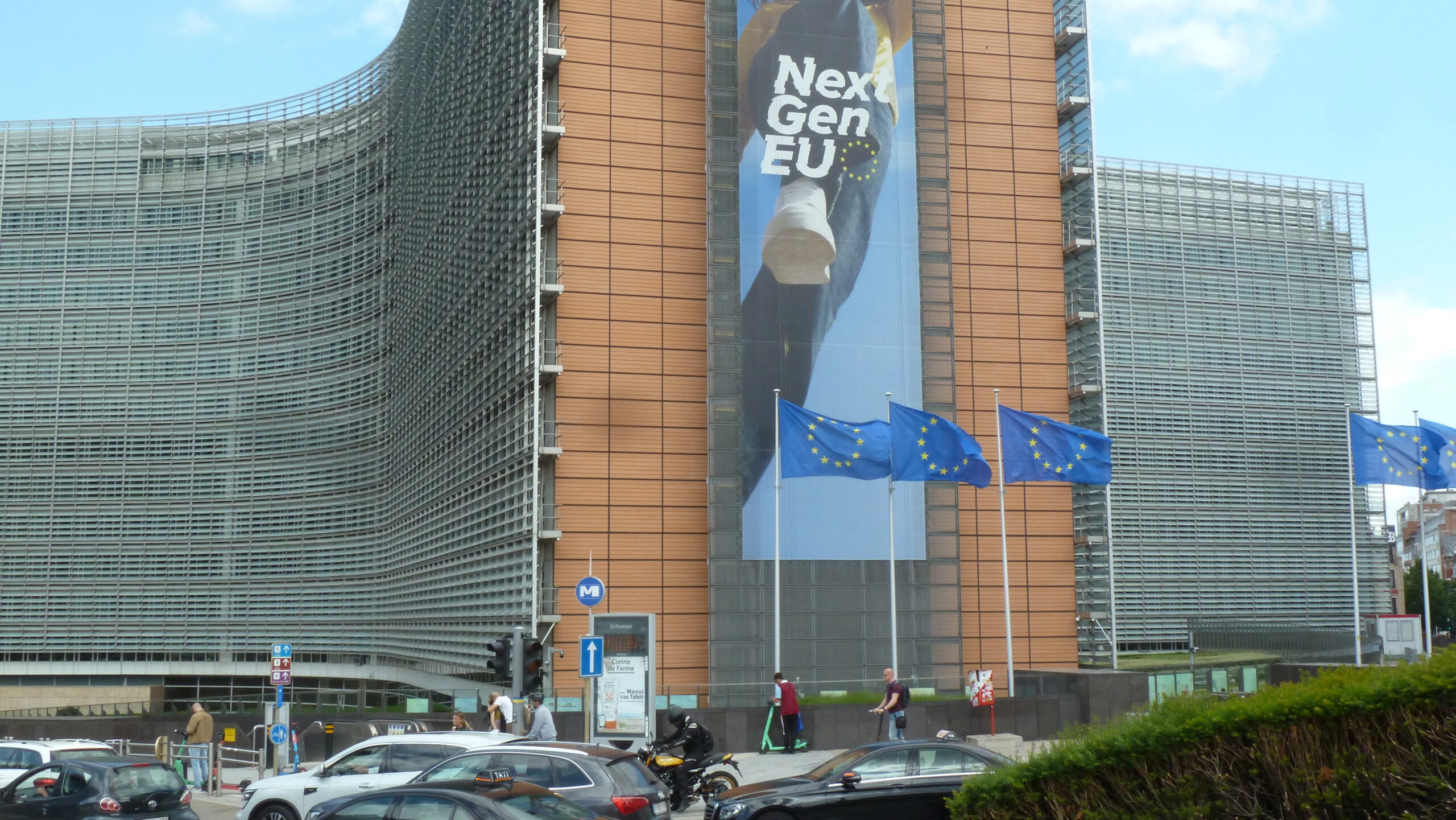
The European Commission will propose an early end to imports of Russian fossil fuels, European Commission President Ursula von der Leyen said on September 16 after a phone call with US President Donald Trump. According to analysts at the Oxford Institute for Energy Studies (OIES), the end of Russian energy imports as early as 2026 would hit Slovakia and Hungary particularly hard, with gas prices in those countries likely to rise to almost double current levels, to around €58/MWh.

Through the efforts of business, the issue of “green hydrogen” production may return to the sphere of bilateral relations between Ukraine and Germany. The signing of the memorandum on the creation of the “Hydrogen Corridor Ukraine-EU” in January 2025 gave a new impetus to the renewal of German business interest in the implementation of the “green hydrogen” production project in Ukraine. The project can be implemented during 2025-2026.

In the context of the suspension of Russian gas transit through the Slovak gas transmission system, Eustream’s financial condition remains stable, the company continues to receive payment for the transport capacities reserved by the Russian side, in accordance with the “ship or pay” requirement of the current long-term contract from 2017 with the Russian company PJSC “Gazprom” until 2050, and also diversifies sources of income through short-term transport contracts with European counterparties, energy companies, gas suppliers, gas traders.

There is an almost unanimous opinion among our energy experts that in the long term, natural gas will retain its important role in the country’s energy balance even in the conditions of the established trend of low-carbon transformation of a number of sectors of economic activity. Given that the price of natural gas is formed in market conditions, the determining component of the final cost of gas supply for the Slovak side is the tariffs for transit of countries of a particular logistics route.

Despite the decision of the Council of the EU dated June 3, 2022 regarding the refusal of member states to import Russian oil and oil products, budget revenues from the use of Russian oil remain an important asset of the Slovak governments.

Annual volumes of Russian gas transit by Eustream, according to the company’s reports, have sharply decreased over the past two years and are: 2014 – 46 bcm, 2015 – 56 bcm; 2016 – 61 bcm; 2017 – 64 bcm; 2018 – 60 bcm; 2019 – 69 bcm; 2020 – 57 bcm; 2021 – 42 bcm; 2022 – 26 bcm. In 2023, the volume of pumping is expected at the level of 16 bcm. This allows loading the capacities of the Slovak GTS only up to 18% and leads to a drop in the profitability of Eustream’s commercial activities (by 30% for the period from 2019).
According to our experts, by the end of 2024, the gas balance of the SR will be provided by pipeline supplies from the European gas market in volumes of up to 70%, as well as supplies of Russian gas through the territory of Ukraine in volumes of up to 20%. The deficit of up to 10% will be reduced due to the planned decrease in consumption in the country during the year.

Based on the results of Cepconsult’s participation on April 24-26, 2023 in the annual international event 15th European Economic Congress, Katowice, Poland, the prospects for reducing the dependence of the Polish liquefied hydrocarbon gas (LPG) sector on Russian supplies were analysed.
