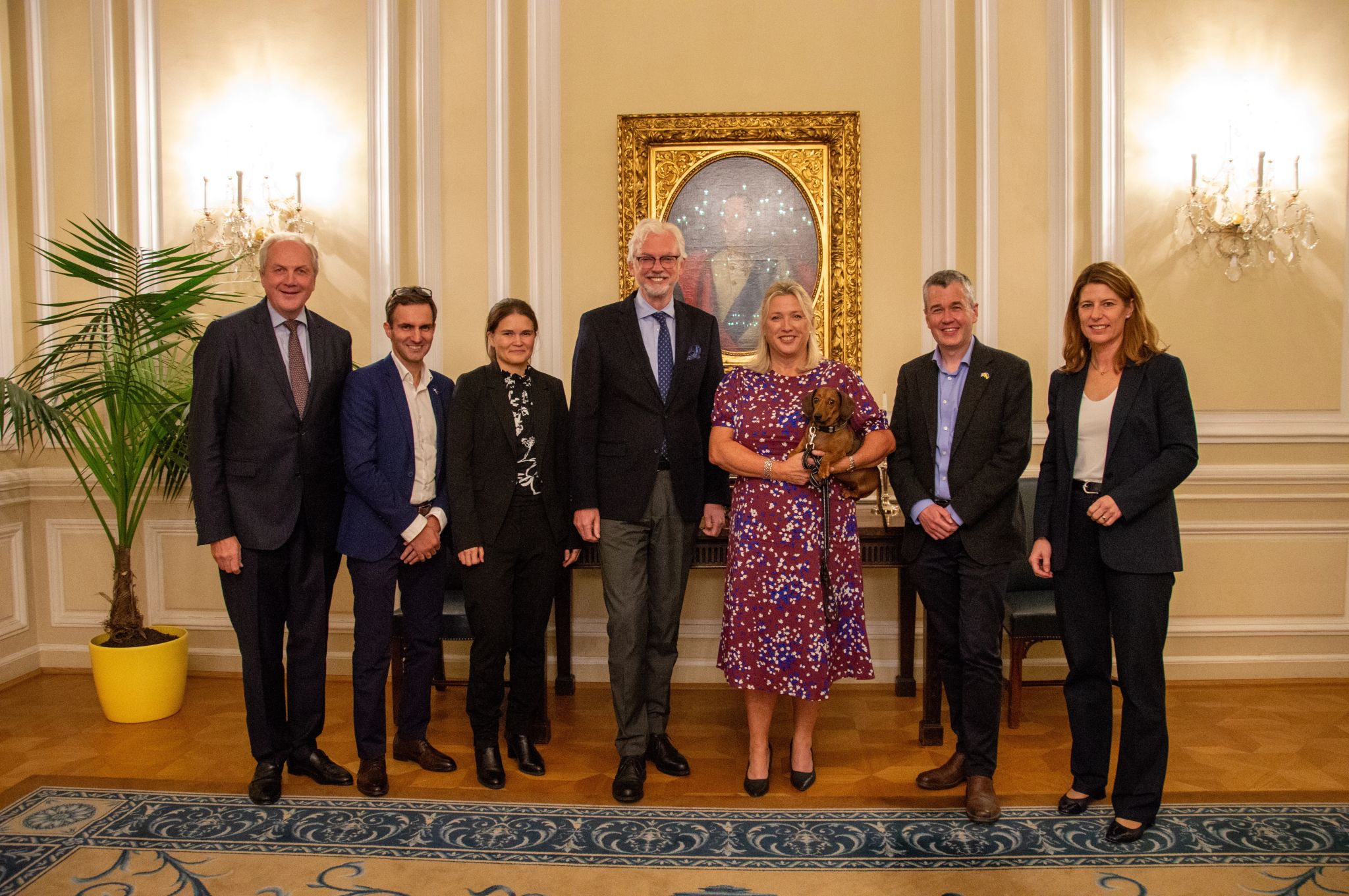
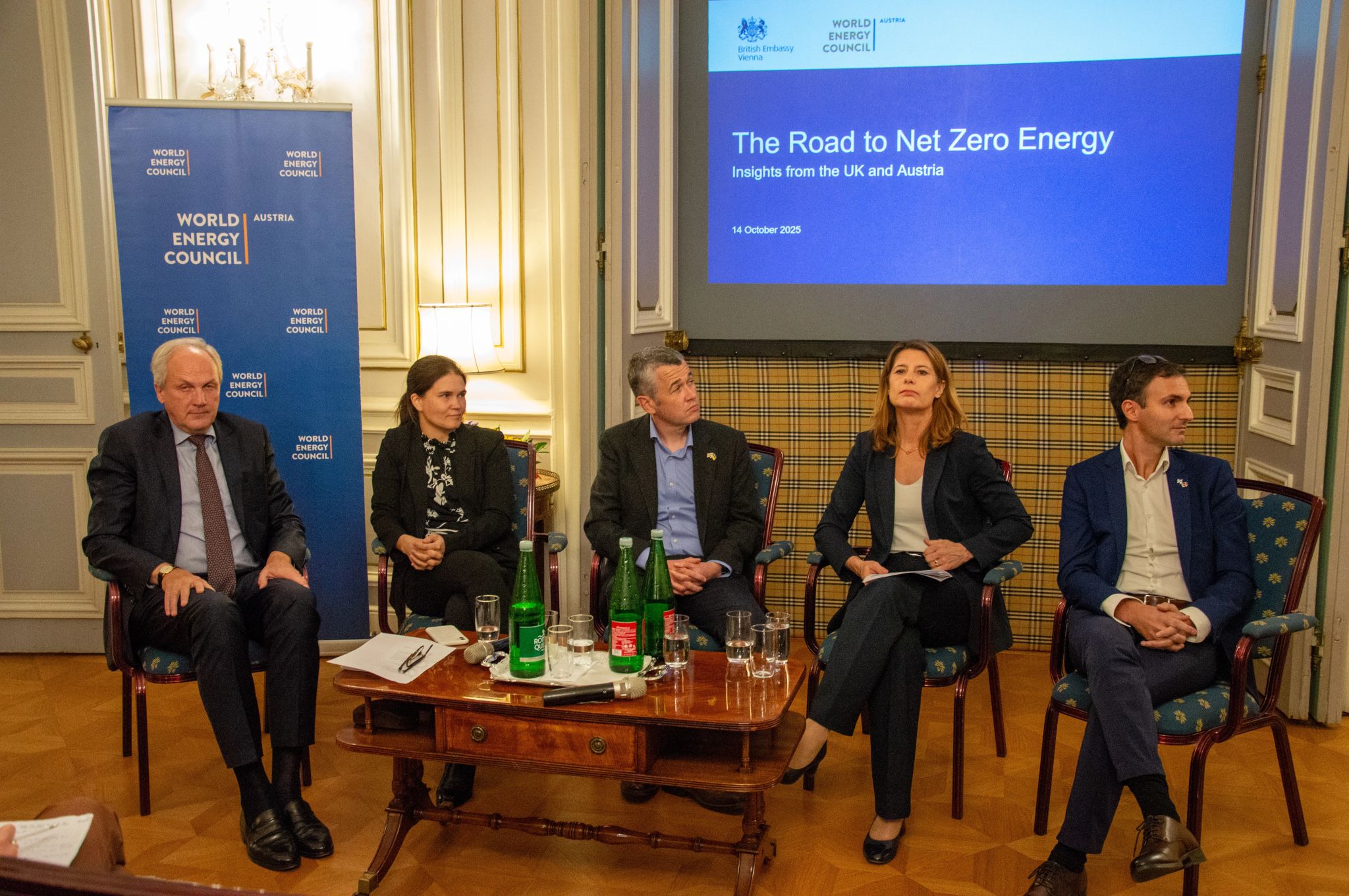
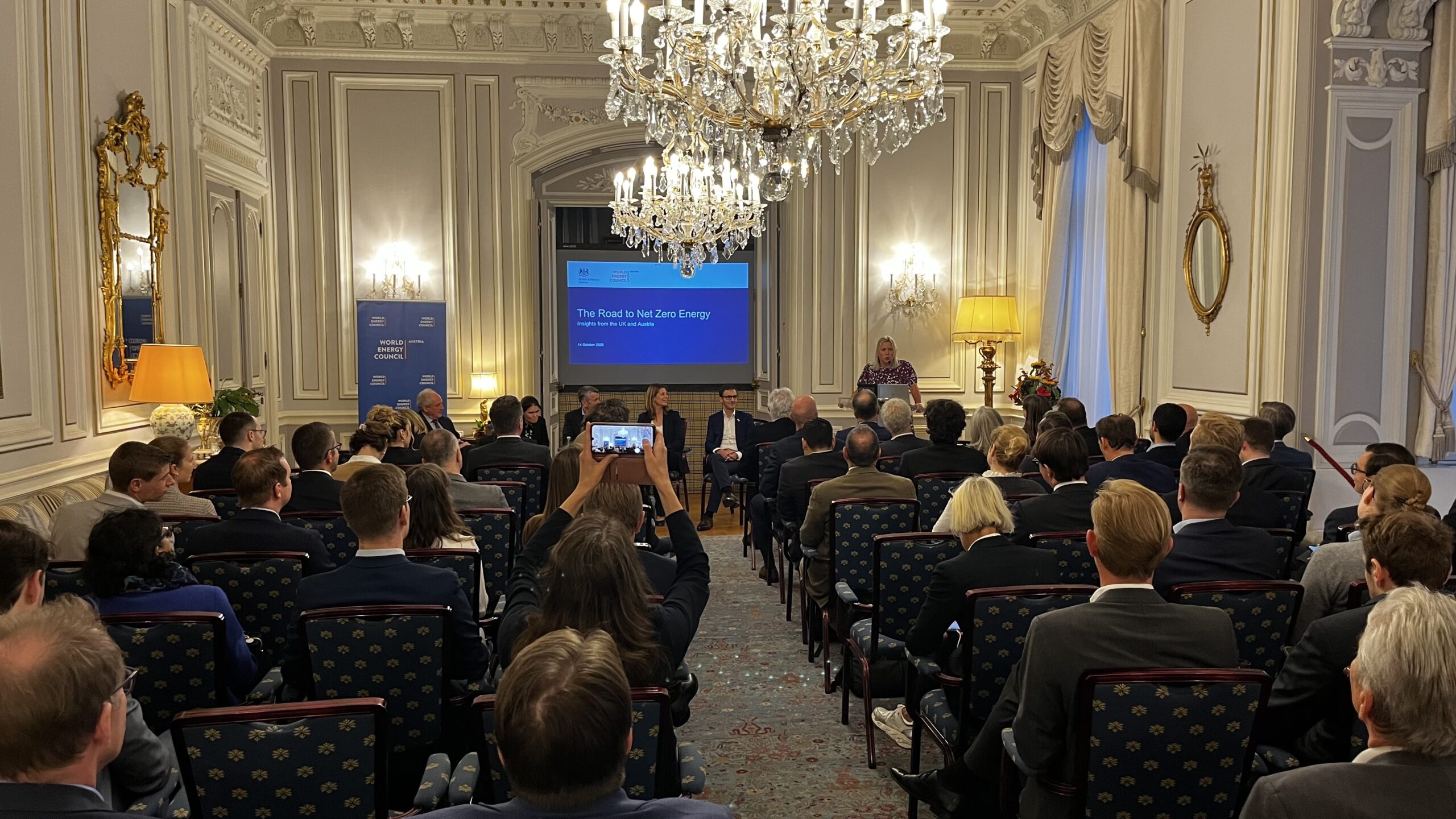
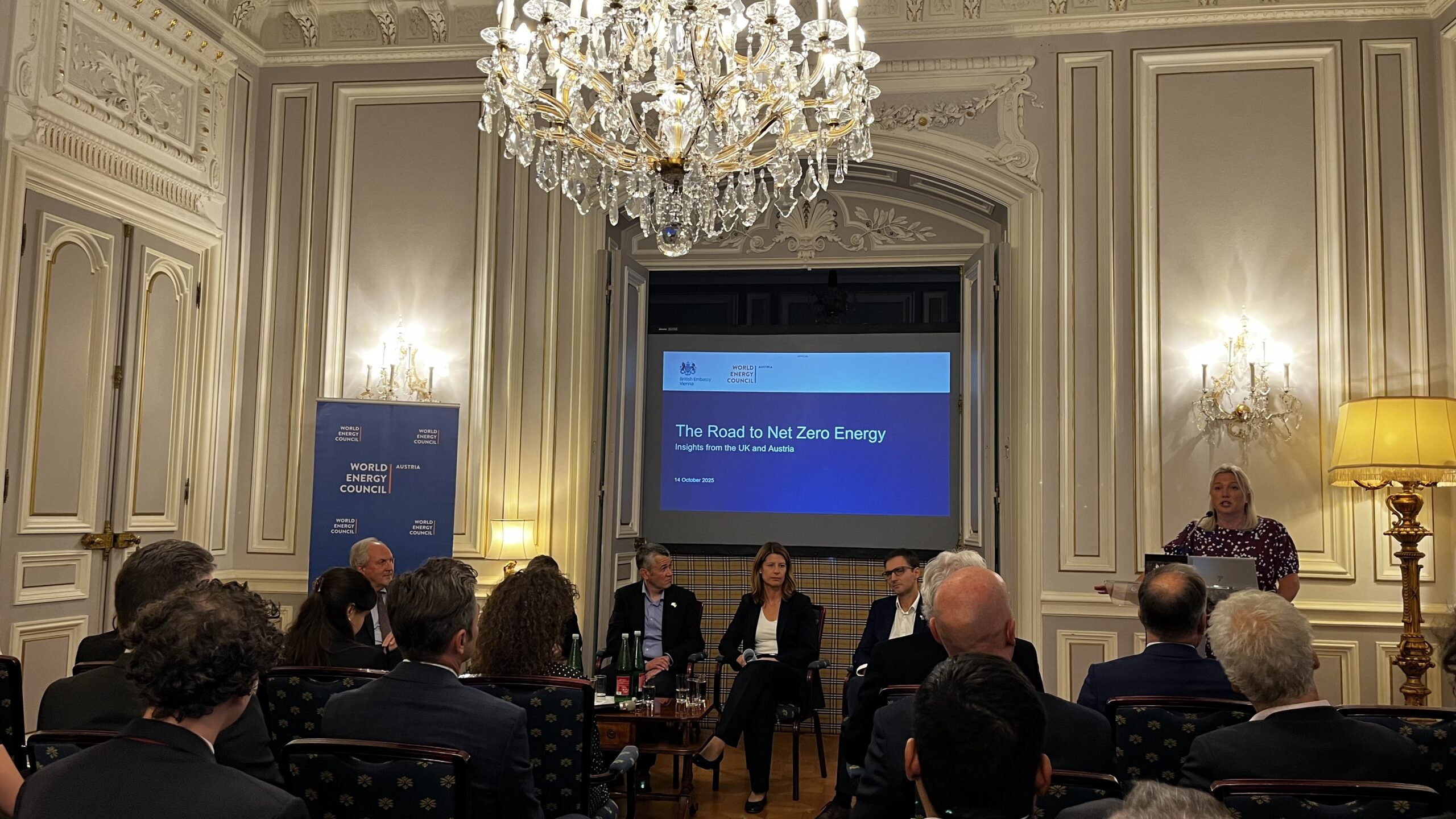
H.E. Lindsay Skoll CMG, Ambassador of the United Kingdom to Austria and UK Permanent Representative to the UN in Vienna graciously made up the welcoming speech hosting this event at her stunning residence. After opening remarks by Dr. Michael Strugl, British edition of the Embassy Energy Talks, moderated by Gerhard Gamperl offered a fascinating mix of perspectives trough out the presentations by the speakers:
Dr. Alfonso Martinez-Felipe (University of Aberdeen) highlighted the Hydrogen Valley in North-East Scotland as a tangible example of how sustainable hydrogen production can drive local and national energy transition.
Dr. Barbara Schmidt (Oesterreichs Energie) underscored that Austria’s 2030 100% renewable goals are ambitious but within reach, though success will require both political will and proactive system integration.
Andrew Horsley (Innovate UK) shared insights from the UK’s innovation programs, noting the future potential role of small modular reactors (SMRs) as low-carbon stabilisers that could complement renewables.
Tara Esterl (AIT Austrian Institute of Technology) reminded us that flexibility is key both on the user side and in the grids. Smarter tariffs, energy savings, and digitalisation must go hand in hand with infrastructure expansion.
Thus the expert panel offered valuable insights into the diverse strategies, innovations, and policy frameworks shaping the energy futures of Austria and the UK. The presentations showcased complementary approaches, from hydrogen sector coupling and renewable integration to nuclear innovation and market-flexibility solutions, all aimed at building resilient, net zero energy systems. The event concluded that collaboration among academia, policy, and industry remains the strongest asset in achieving a secure, sustainable, and integrated energy future.
